2026-08-22 · Miguel Alvarez
What Causes Circuit Breaker Trips During Los Angeles Heat Waves
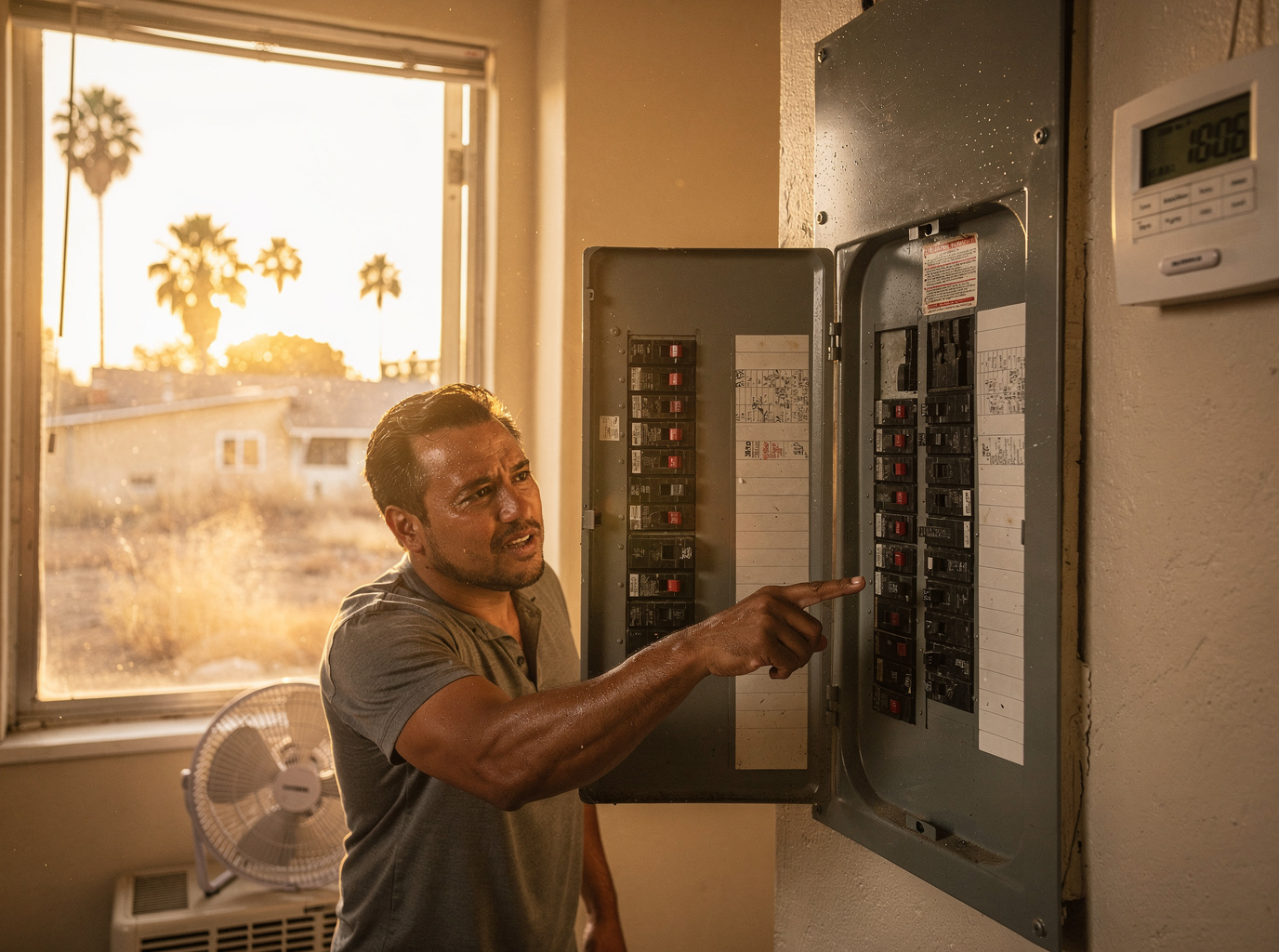
During Los Angeles heat waves, circuit breaker trips most often result from circuits overloaded by simultaneous high-draw appliances, especially air conditioners running nonstop in homes with undersized panels or outdated wiring. The Mediterranean climate brings warm dry summers that push temperatures high enough to keep units cycling for hours, and many houses in areas like East Los Angeles and Watts still rely on electrical systems installed decades ago that were never meant for today's loads.
Overloaded Circuits from Air Conditioning Demand
Los Angeles summers send residents in Silver Lake and Echo Park straight to their thermostats, and a single window unit or central system can pull 15 to 20 amps on its own. When refrigerators, televisions, and lighting stay on at the same time, the total draw exceeds what a 15- or 20-amp breaker is rated to handle. In neighborhoods with smaller 100-amp service panels, this combination trips breakers repeatedly during peak afternoon heat. Older homes in Boyle Heights often share this issue because their original wiring was sized for far fewer appliances than modern households run daily.
Impact of Aging Wiring in Los Angeles Housing Stock
Many properties built before 1970 in Koreatown, Westwood, and South Central still contain aluminum branch wiring or early copper circuits that have loosened at connections over time. Heat accelerates oxidation on these connections, raising resistance and generating more heat inside the panel. When an air conditioner starts its compressor, the sudden surge finds the weak point and trips the breaker. Homeowners facing repeated trips in these older structures frequently need to evaluate whether a circuit breaker replacement or full electrical panel upgrade will restore reliable capacity.
How Heat Affects Breakers and Connections
High temperatures in the attic or garage where panels sit can reduce a breaker's trip threshold by several amps. In the dry summer air common across Pasadena and Glendale, dust also settles on contacts and adds friction. A breaker that once handled 20 amps cleanly may now trip at 16 or 17 amps once internal parts warm up. This effect compounds in homes near the Hollywood Sign or Griffith Observatory where afternoon sun bakes south-facing walls and roofs for hours.
Practical Steps to Reduce Trips
Track which rooms lose power during the hottest part of the day and note the appliances running at that moment. Move high-draw items like portable ACs or space heaters to separate circuits when possible. Schedule an inspection of the main panel and any visible wiring before the next heat wave arrives. Residents dealing with knob-and-tube systems can review cost factors for replacing knob and tube wiring in older Los Angeles homes to understand long-term options that match current electrical demands.
When to Call for On-Site Evaluation
Persistent trips that happen even after reducing loads point to deeper issues such as undersized service entrance cables or degraded breakers. An electrician familiar with Los Angeles housing stock can test voltage drop under load and check for hot spots with an infrared camera. Star Electric maintains regular hours Monday through Friday 8am–6pm and Saturday 9am–2pm to handle these evaluations across Downtown, Venice, and surrounding communities.